The Employees by olga ravn book review
***spoiler warning***
DUH…
Follow us on Insta!
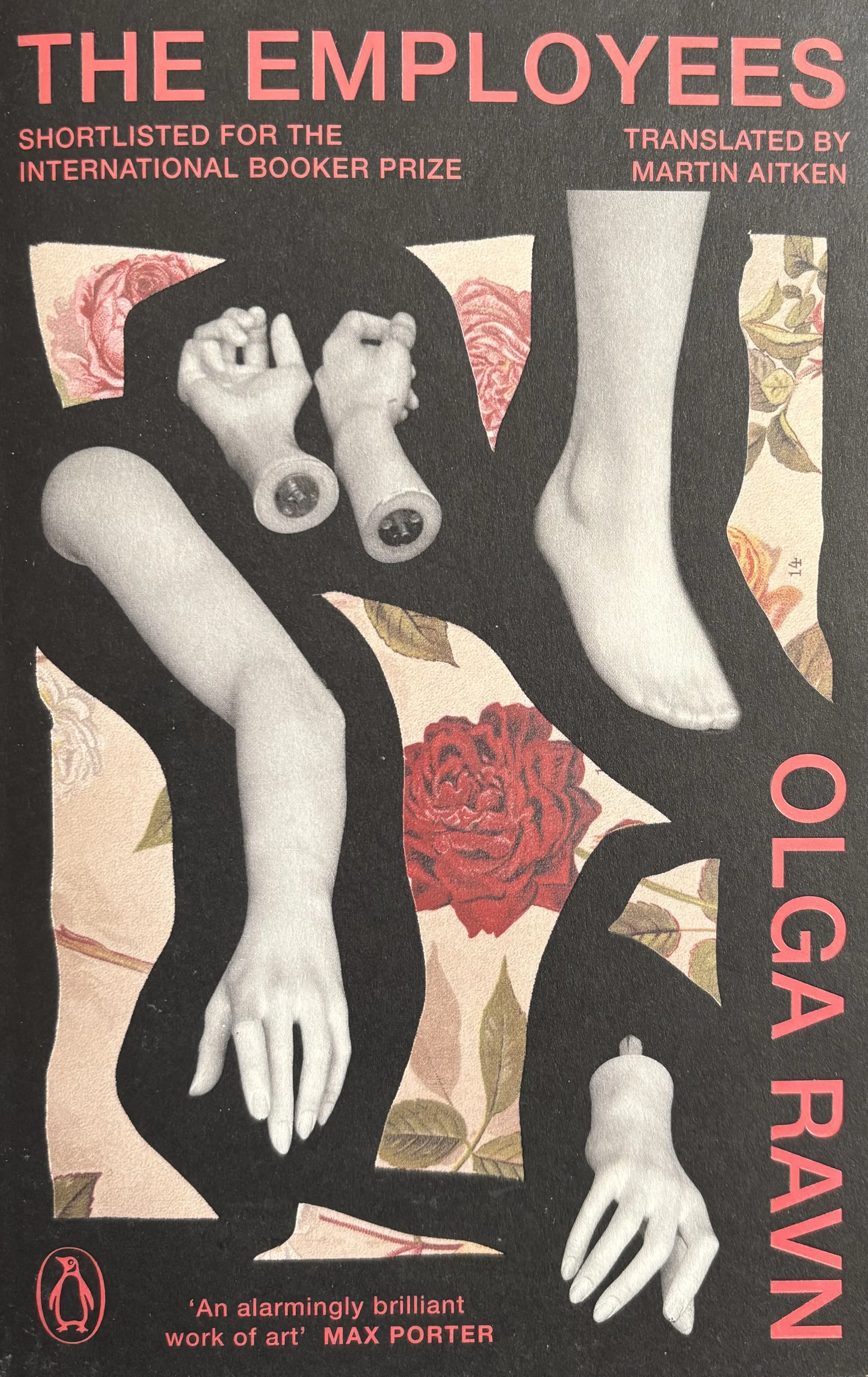
In the near distant future, millions of miles from Earth, there is a crew on the Six-Thousand Ship that consists of those who were born and who were made. Those who will die and those who will not. The story consists of unnamed statements from both human and humanoid crew members as they explain their experiences on board in their final days. There is this ever-present separation between the two groups of workers: an us and them mentality. The humans on the ship originally come from Earth, though it’s never revealed how they came to be chosen to be a part of the crew. None of them are named. They start to become nostalgic about their previous lives on Earth and yearn for simple pleasures. Humans are recognised as being those who were born naturally and who will eventually die. The humanoids are artificial humans who are also part of the crew on the ship. They were created from pods and possess human-like bodies. Programmed to perform certain tasks, they were created to carry out duties on the ship. They are constantly updated to include new knowledge and features and are aware that they cannot die, but instead, will just be restarted in another place. It is often unclear which personal statements in the book are attributed to humans and which are attributed to humanoids. However, what is interesting is that within the statements you can see that the human and humanoid employees both have a longing for the same things. They want warmth, intimacy and the far-away Earth that is only a persistent memory in their minds.
The catalyst for the “end” is when the ship takes on board a number of strange organic objects from a newly discovered planet and the crew find themselves completely attached to them. Olga Ravn’s The Employees packs a compelling science fiction tale about a new place called “New Discovery” after the end of the world. Arousing the readers’ olfactory senses, the book creates a sense of despair and unease that is tough to get rid of. We see the wondrous functioning of sense memories in these humans and humanoids, especially that of smell, in helping them recall whatever is left of their pasts in their physically, digitally altered existences. “The first smell,” a humanoid says, “was the smell of outside, of the weather . . . Of fresh air . . . the smell of gravity. The last smell that disappeared was the smell of vanilla. That and the fragrance of my child when I would bend over the pram to pick him up.” These powerful vignettes immediately transport the reader, helping them access their own personal library of memories and by extension, imagine a time when none of those exist. Deeply empathetic, and equally despondent, the novel is an elegy for human attachments.
The Employees shows an emotional journey where humans, humanoids, spaceships, androids, algorithms, can all together no longer fathom the present or the future. Planet earth has been destroyed and the surviving humans have been shipped on the Six-Thousand Ship, along with humanoids who resemble flesh-and-bone humans in a freakish way. They are constantly recorded, observed, and trained to remove all their emotions on a regular basis, yet what they philosophize about the most is just these things.
The novel is crisp, pushing the reader to finish reading it in a single sitting, but also packs within a myriad of thoughts. An endless stream of nervousness about the future is its animating spirit, igniting notions about the past, present and future alike in the reader’s mind. In that, the novel becomes a cipher for our times, as we ail through one calamity after another, seldom missing a beat.
I give this book at 4 out of 5.