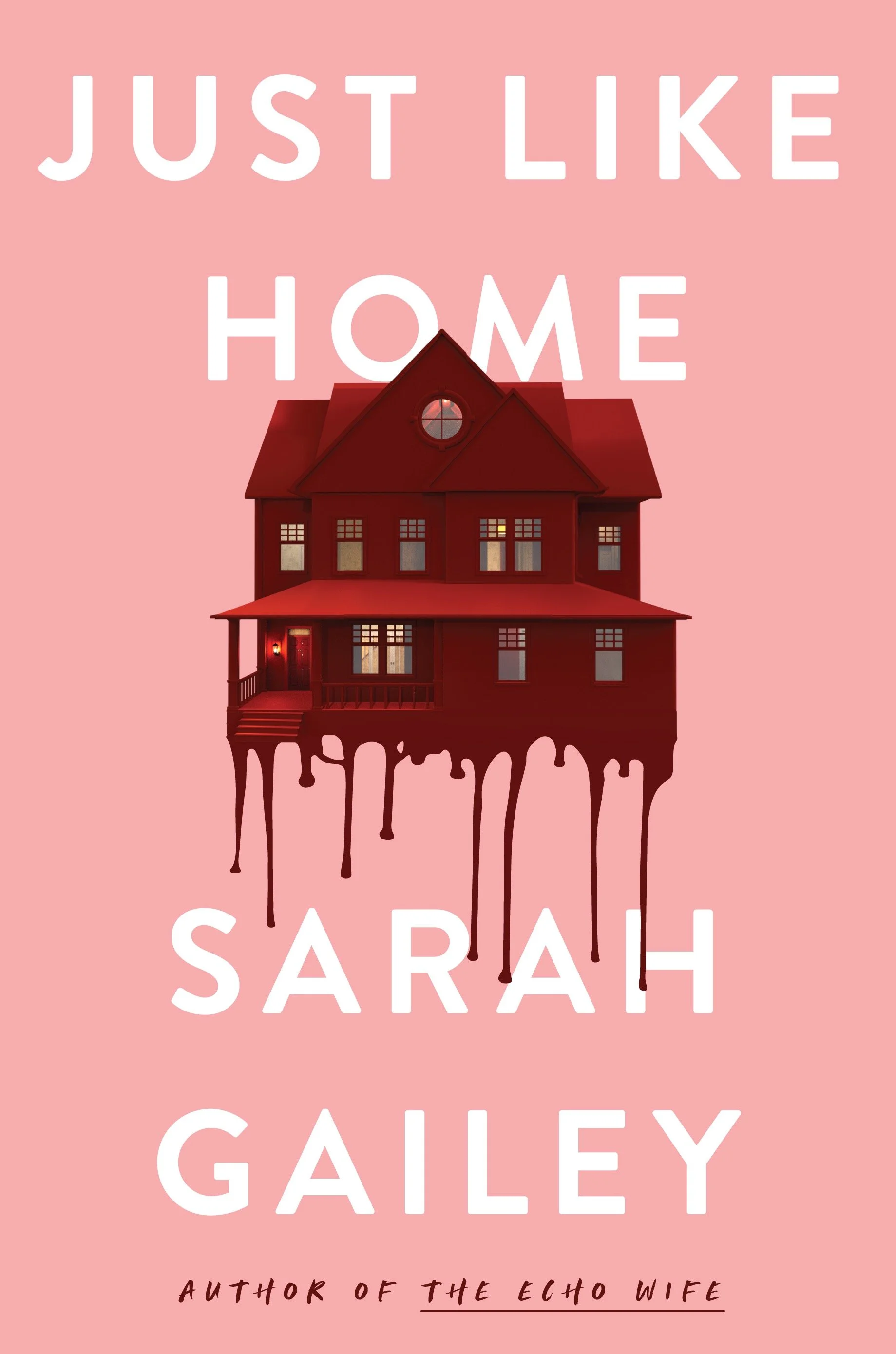
Just like home by Sarah Gailey
book review
***Spoiler Warning***
Duh…
Follow us Instagram!!
Just Like Home by Sarah Gailey is a dark gothic thriller following Vera, who returns to her childhood home to care for her dying, toxic mother. The house is notorious as the site where her late father, a serial killer, murdered his victims. As mysterious notes in her father's handwriting appear, Vera must confront her traumatic past, a creepy artist in the guest house, and the dark secrets hidden within the house.
When Vera arrives at Crowder House, her mother Daphne has made the dining room her “base of operations” given her limited mobility. Over the years, Daphne has profited off the dark legacy of Francis Crowder, who built Crowder House himself. Francis was a notorious serial killer killing men who he perceived to be full of the nasty “grease” that be believed to be inside all men. Yet, Francis loved his only daughter, Vera. He doted on her, adored her and essentially protected her from Daphne’s vicious path. At the very beginning we have a complicated and complex duality of love within the Crowder household. Vera is showered with love and affection from her father who brutality tortures and kills people whilst Daphne’s feelings about her daughter were on the other end of the spectrum. So, it’s no wonder Vera is more like her father towards the end of the book. Complicating matters even more for Vera than dealing past and present parental issues is Daphne’s “house guest” James Duvall, an artist who is absorbing the “aura” of the house for his art. James is not an unknown entity to Vera, his father literally wrote the book on Francis Crowder and his infamous deeds as a serial killer. So, naturally Vera is untrusting of James’s motives for being in the house.
The novel is told from Vera’s perspective, but in a split timeline of the present and pre-teen/ teenaged Vera before her father crimes were uncovered. The reader is split between the past and present and Vera’s weariness of her mother and fondness for her father. The Whiplash of Vera’s timeframes and emotions from being protected and adored by her father in the past to only be verbally and psychologically abused by her mother in the present is raw and unnerving. I felt a great deal of sympathy for Vera and more understanding of her conflicting emotions towards her family. The contrast of the loving father who just happens to be a serial killer alongside the mentally abusive mother almost paints the parent who is the killer in a better light. At least young Vera is understandably confused and more “loyal” to her father.
Also, the return to such a traumatic space for Vera makes the reader second guess all the “hauntings” that happen within the house; more specifically her childhood bedroom. It would influence anyone’s psyche. In the present, Vera is continually left uneasy by her mother’s mood swings which at times is a reverse of the spiteful woman she knew growing up. Plus, the verbal hostilities with James only amplifies Vera’s sense of unease. To the point that she hears noises, thinks she sees shadows moving, and is convinced *something* is under her bed to the point she goes out and buys a new bed. The icing on the cake of these creepy and potentially supernatural moments are the folded pages she randomly finds that are written in her father’s handwriting. The timing of the instances of these creepy scenes is expertly doled out by Gailey. She’s got a wonderful sense of pace in the novel; rooted in realism and it kept you in edge enough to convince the more sceptical person to believe in ghosts.
Though, when reading I could see how some readers would want to know more about Francis and his crimes as often in society, we can become transfixed by serial killers. However, I feel like that would have overshadowed the focus point where the family of the serial killer were the centre of the story rather than the killer themselves. Gailey’s novel reminded me so much of Shirley Jackson’s The Haunting of Hill House, where the house is a living, breathing entity in its own right and seeks to protect the emotionally hurt female protagonist.
I give this book 4/5. A surprisingly good read!