earthlings by sayaka murata book review
***spoiler Warning***
DUH…
Follow us on Insta!!
“The out-of-body magical power. I had to summon the out-of-body magical power. If I used that, then I wouldn’t have to feel anything.”
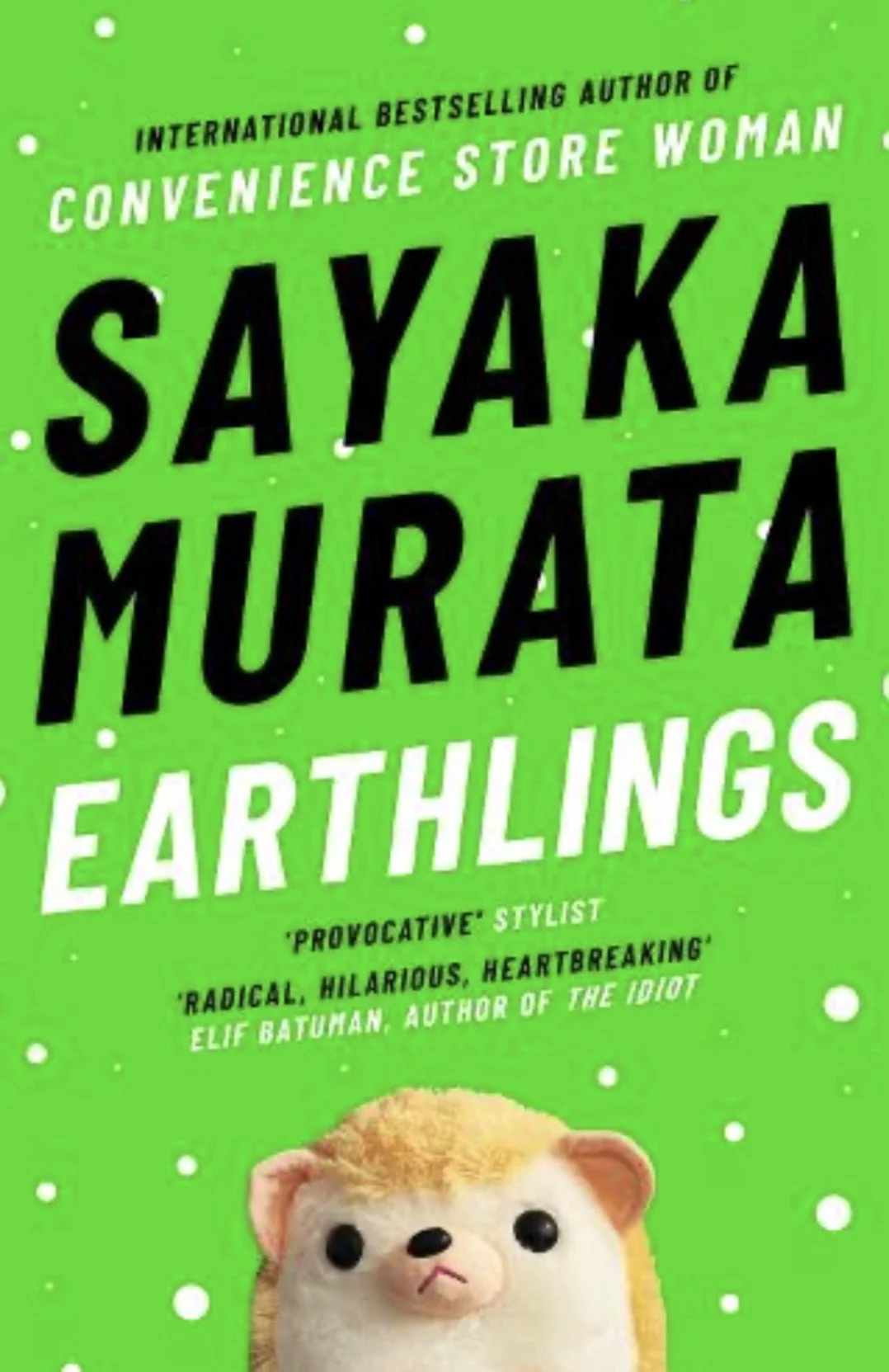
Translated from its original Japanese, this novel by Sayaka Murata explores themes of society rules and expectations. It becomes clear early in the story that Natsuki uses her imagination to escape the realities of her life. She thinks she’s a magician with special powers and in her cousin, Yuu, she finds her kindred spirit – he believes he is an alien, a Popinpobopian – searching for a ship to take him back to his home planet. Treated as the dud child by her family, specifically from her harsh mother, her concerns are brushed away. No one believes Natsuki is sexually assaulted by her teacher which could explain her obsession with magic and aliens as a form of escape from the sexual trauma. There are also hints that Yuu is sexual assaulted by their uncle and is a product of rape which explained the cousins close bound to each other. This would explain their hypersexuality towards each other as the two become a little too close for the family’s liking and are separated. There are plenty of indicators that both Natsuki and Yuu do not feel safe with their own family and are desperate for an escape.
This trauma and this belief of magic and aliens does not go away for Natsuki. This is shown through how Earthlings is generally told in a deadpan, slightly naïve tone, and while that’s to be expected in the chapters looking at Natsuki’s childhood, it’s a little more surprising in the adult sections. Years pass, and Natsuki is in her 30’s and has grown up under intense supervision yet she still believes in her magical powers and alien origins. Even more – she now has a husband who thinks in a similar way. Theirs is an asexual marriage of convenience, to get their families of their backs and escape the ‘Factory’. The ‘Factory’ is how Natsuki refers to society, where people grow up, get jobs, pop out kids and nothing else is expected of them. No other part of life is important. As long as you are seen to be doing these things, that’s all that matters. Therefore, your body doesn’t really belong to you if you have no free will in what to do with it. Natsuki does not want this and is very clear with her clinical view of society:
“My town is a factory for the production of human babies. People live in nests packed closely together. It’s just like the silkworm room in Granny’s house. The nests are lined up neatly in rows, and each contains a breeding pair of male and female humans and their babies. The breeding pairs raise their young inside their nests. I live in one of these nests too.”
If you don’t do as expected, then you’re the proverbial nail that needs hammering down, and throughout Earthlings we see how Natsuki is repeatedly subject to this pressure. Her friends constantly pressure her into feeling she should have kids, and she’s even hesitant about taking a long break between jobs as it may cause her problems in interviews later. Possibly, Natsuki unusual focus on magic and aliens is a hyperbole of her emotions of feeling unhuman for not wanting a traditional family and that is the only way she can meditate her sentiments. If you don’t do as expected, then you’re the proverbial nail that needs hammering down, and throughout Earthlings we see how Natsuki is repeatedly subject to this pressure. Her friends constantly pressure her into feeling she should have kids, and she’s even hesitant about taking a long break between jobs as it may cause her problems in interviews later.
The pinpoint of the story is when Natsuki and her husband Tomoya decide to take a break in the country, where she catches up with Yuu once more, and it’s here that they make one final attempt to avoid their fate of becoming Earthlings. It all sounds harmless enough, but if you think about it carefully, you’ll realise where this might lead. The Factory definitely has its drawbacks, but by the end of the book we see what happens if you ignore society’s unwritten rules and try to come up with your own. At the end of the novel, Natsuki, her cousin Yuu, and her fake husband Tomoya live together in an isolated mountain house, fully embracing their shared delusion of being aliens who reject human "factory" norms. They descend into total psychosis, mutilating and cannibalizing each other to completely shed their human identities. When family members and rescuers finally break in, they find the starving, bloody trio chewing on human flesh. The horrified rescuers vomit in disgust, while the trio calmly claim they are all pregnant, completing their bizarre rebellion against society through ultimate transgression.
Murata’s novel excellently portrays the two extremes of conformists and non-conformists of society. The moral of the story seems confused as whether you are a tool of the Factory or not, there seems to be no happy ending. However, I think this is a great depiction of what it’s like in does society. We are doomed if we do and doomed if don’t. You can decide if you want to be a part of the factory or eat your own flesh.
I give this book 4.5 out of 5.